First-Car Costs
First-car costs split into one-time purchase expenses and ongoing monthly bills. Purchase costs include sales tax, registration, title fees, and initial insurance setup, which vary by location and vehicle price. Ongoing costs typically include insurance, fuel or charging, routine maintenance, tires, and repairs that show up as the car ages.
In the U.S., AAA’s annual “Your Driving Costs” estimates that total ownership cost per mile rises with vehicle size and age, and it includes depreciation, fuel, maintenance, tires, and insurance. Many budgets miss depreciation because it does not hit the bank account every month, yet it affects your real cost of driving. Another data point: tires often become a major line item after 25,000–60,000 miles depending on tread type, alignment, and driving style.
Where First Budgets Break
People often underestimate the “friction costs” around ownership. Registration renewals, emissions testing, and annual inspections can land at inconvenient times. Insurance also changes after life events, such as moving zip codes or adding a driver, and those changes can raise premiums even if you drive fewer miles.
Another common mistake is treating maintenance as optional. Routine services like oil changes, brake inspections, and fluid checks reduce the chance that small issues become expensive repairs. When people delay service, the repair bill often arrives with additional labor because parts seize, sensors fail, or damage spreads.
Estimate Your Monthly Total
Start with a 12-month cash plan
Build a cash plan that separates fixed costs from variable costs. Fixed costs include insurance, registration, and any parking or tolls you already know you will pay. Variable costs include fuel, charging, maintenance, and repairs. Use your expected mileage, then add a buffer for surprises.
Why it works: cash planning matches how bills actually arrive. In practice, you can set up 12 monthly lines in a spreadsheet and fund them from your paycheck. A simple approach uses three buckets: “known bills,” “wear items,” and “repairs.”
What it looks like: if insurance is $140/month and registration averages $25/month when spread out, you can lock those first. Then estimate fuel using your miles per gallon and local gas price. Finally, add a wear-item estimate for tires and brakes based on typical replacement intervals.
Tools and methods: a spreadsheet with a “best case / expected / worst case” column helps you see range. If you use a budgeting app, still export the data so you can adjust assumptions when the car’s real consumption differs.
Price insurance using repair reality
Get quotes before you buy, not after. Insurance pricing depends on the car’s repair cost, theft risk, and safety features, not just its purchase price. Two cars with the same sticker price can have very different premiums if one has expensive body panels or hard-to-source parts.
Why it works: you reduce the chance that insurance becomes the largest monthly bill. In practice, request quotes for the exact trim and year you plan to buy. If you are comparing two vehicles, quote both so you can see the delta.
What it looks like: you may see a $30–$80/month difference between similar models due to parts cost and claim history. If you choose a higher deductible, you lower the premium but increase out-of-pocket costs after a claim.
Tools and methods: use at least 2–3 insurers and compare coverage limits, deductibles, and liability limits. Keep notes on what each quote includes, because “full coverage” can mean different things.
Estimate fuel with real mileage
Fuel estimates should use your expected miles per gallon (MPG) or miles per kWh for charging. Many online calculators use EPA estimates, which often differ from real-world driving. City driving, cold starts, and highway speed change consumption.
Why it works: fuel is one of the most adjustable costs, but it is also one of the easiest to misread. In practice, measure your consumption after purchase for 2–4 weeks, then update your spreadsheet.
What it looks like: if your car averages 28 MPG instead of an assumed 32 MPG, the monthly fuel cost rises even if gas prices stay stable. For example, at 1,000 miles per month, the difference between 28 and 32 MPG can be about 14 gallons, which multiplies by your local gas price.
Tools and methods: use the car’s trip computer for a rough check, then confirm with receipts. If you drive mostly short trips, expect lower MPG than highway-only driving.
Outcome targets: update your plan after you have 3 data points. That reduces the chance you will over-allocate money to fuel and underfund repairs.
Realistic First-Car Scenarios
Scenario A: Used compact, 45k miles
A buyer chooses a used compact with about 45,000 miles and a purchase price of $10,500. They estimate insurance at $135/month after quotes, fuel at $160/month based on 28 MPG and 900 miles driven, and registration at $25/month averaged. They set wear-item allowance at $60/month for tires and brakes and repairs at $90/month based on age and unknown service history.
In the first 4 months, they pay a $450 brake inspection and a $700 tire replacement after a slow leak is found. Their spreadsheet updates the repair allowance upward for months 5–12. The key lesson is cash timing: the monthly average looked fine, but the early repair created a cash crunch until they used the emergency buffer.
Skip the “average monthly” trap. Cash timing decides stress.
Scenario B: Newer car, higher insurance
A buyer finances a newer car priced at $22,000 with a monthly payment they can handle. Insurance quotes come in at $220/month because the model has higher repair costs and the buyer’s location raises premiums. Fuel runs at $190/month for 800 miles, and maintenance is lower initially, around $60/month when averaged.
They still budget repairs at $70/month and keep $2,000 liquid for early issues. After 8 months, a $1,100 transmission-related diagnostic and repair appears, and the buyer notices that insurance did not cover the deductible and diagnostic fees. Their plan survives because they separated fixed costs from the repair buffer.
Cost Checklist and Comparison
| Cost category | What to estimate | Common range (U.S.) | How to reduce error |
|---|---|---|---|
| Insurance | Quotes by exact trim, deductibles, liability limits | Often $100–$300/month for new drivers | Quote before purchase; compare deductibles |
| Fuel / charging | Miles × real consumption × local price | Often $120–$300/month depending on mileage | Update after 2–4 weeks of driving |
| Maintenance | Owner’s manual schedule + condition-based items | Often $40–$120/month averaged | Use service history; plan for early catch-up |
| Repairs | Monthly allowance + emergency fund | Often $50–$200/month averaged | Pre-purchase inspection; keep $1k–$2k liquid |
| Registration / taxes | Itemized fees and renewal schedule | Often $200–$800 upfront | Ask for itemized totals; spread renewals |
Skip the “one calculator” approach. Use quotes and receipts.
Mistakes New Owners Make
Buying before insurance quotes
Why it happens: buyers focus on monthly car payments and delay insurance shopping. Impact: insurance can rise after purchase, forcing a change in coverage or a rushed sale. How to avoid it: request quotes for the exact year, make, model, and trim before you commit, then compare deductibles and liability limits.
Underfunding tires and brakes
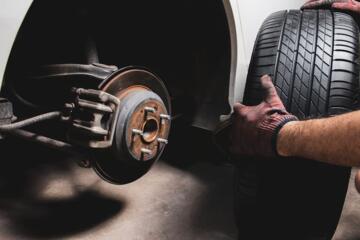
Why it happens: tire and brake costs show up later, and people remember the last time they paid for them. Impact: a $700–$1,200 tire bill or a brake job can arrive right after other repairs. How to avoid it: check tire age and tread depth during inspection, then budget for replacement based on mileage and driving conditions.
Ignoring maintenance records
Why it happens: service history can be incomplete, and sellers may describe maintenance in vague terms. Impact: you pay for “catch-up” work sooner than expected, plus you risk secondary damage. How to avoid it: ask for receipts, confirm intervals, and treat missing records as a higher-risk purchase.
Using only average monthly cost
Why it happens: averages hide the timing of big bills. Impact: cash flow fails even when the long-run average looks affordable. How to avoid it: build a 12-month cash plan with a repair buffer and keep a separate emergency fund.
FAQ
What costs show up in the first month?
Expect insurance to start immediately, plus registration and title-related fees depending on your state. If you buy from a dealer, you may also pay documentation fees and sales tax at purchase. If you buy privately, you still pay sales tax where required and you handle title transfer and registration yourself. Plan for at least one “surprise” bill such as a pre-purchase inspection, a basic service, or a tire replacement if tread is low. Keep a buffer so you do not rely on credit cards for early ownership.
How much should I budget for repairs?
A repair budget depends on the car’s age, mileage, and service history. Many owners use a monthly allowance plus an emergency fund for larger events. For a used car with unknown history, a repair allowance in the $50–$200/month range can be reasonable as a planning starting point, then adjust after you see actual bills. The emergency fund matters more than the average because repairs arrive in lumps. If you cannot hold $1,000–$2,000 liquid, lower your risk by choosing a car with documented maintenance and a clean inspection.
Do I need full coverage insurance for a first car?
Full coverage usually means liability plus collision and comprehensive, with deductibles. Whether it makes sense depends on your loan terms, your car’s value, and your ability to pay deductibles after damage. If you finance, the lender often requires collision and comprehensive. If you own outright, you can compare the car’s market value against the deductible and likely repair costs. If you choose a high deductible to reduce premiums, confirm you can afford that amount after a minor accident or theft-related claim.
How can I estimate fuel costs without guessing?
Use your planned monthly miles and your expected consumption. Start with EPA numbers only as a rough first pass, then measure real consumption after purchase. Track miles driven and gallons used for 2–4 weeks, then update your spreadsheet. If your driving includes short trips, cold starts, or heavy traffic, your real MPG often drops compared with highway-only driving. For EVs, use your charging receipts and account for charging at home versus public chargers, since prices vary. One tool that helps is a simple spreadsheet with a “price per gallon” input.
Is a cheaper car always cheaper to own?
Not always. A lower purchase price can come with higher insurance, higher repair costs, or more frequent wear items. Insurance depends on repair costs and claim patterns, so two cars with similar prices can have different premiums. Older cars may need more maintenance and repairs, while newer cars can carry expensive parts and sensors. The best comparison uses a 12-month cash plan that includes insurance, fuel, maintenance, repairs, and registration. If you compare only the monthly payment, you miss depreciation and the timing of big bills.
Author's Insight
Cost planning works best when you separate timing from averages. A spreadsheet with three scenarios helps because repairs arrive in lumps, not evenly. I often see buyers underestimate insurance and tires, then overestimate “maintenance-free” periods. In a draft budget I reviewed on 2026-08-01, the biggest mismatch came from fuel assumptions that ignored short-trip driving.
Skip the single forecast. Use ranges and update after receipts.
Key Takeaways
- Quote insurance for the exact trim before you buy, then compare deductibles and liability limits.
- Build a 12-month cash plan with separate buckets for known bills, wear items, and repairs.
- Estimate fuel using expected miles and real consumption, then update after 2–4 weeks.
- Budget for tires and brakes early, especially on used cars with incomplete service records.
- Keep $1,000–$2,000 liquid for early repairs, then adjust your monthly repair allowance based on what actually happens.
Start with quotes and receipts. Then refine the numbers once the car is yours.