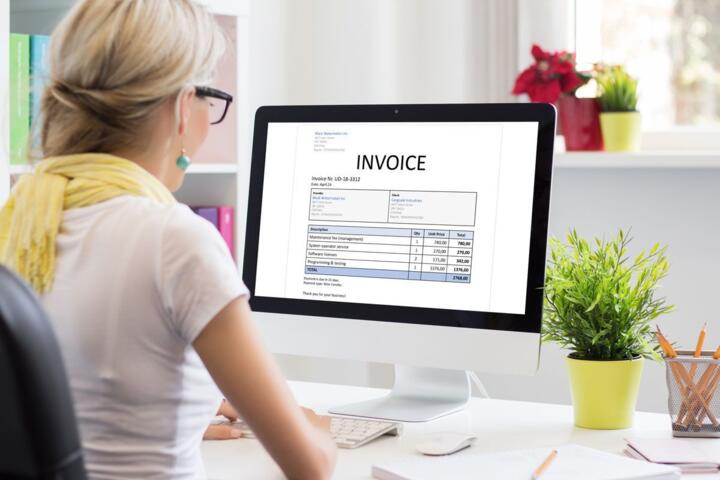
First Invoice Basics
A first invoice often fails for three reasons: VAT wording is wrong, payment terms are unclear, and late fees are charged in a way that conflicts with contract or consumer rules. If you invoice a UK business or a UK consumer, VAT treatment depends on whether you are VAT-registered and on the customer’s status. HMRC’s VAT guidance distinguishes between VAT-registered businesses and non-VAT-registered customers, and it also sets out rules for charging VAT on taxable supplies.
Two measurable facts help you anchor the paperwork. First, UK VAT is charged at standard rate 20% on most taxable goods and services, unless a reduced rate or exemption applies. Second, late payment interest and compensation rules for business-to-business contracts in the UK are set by the Late Payment of Commercial Debts (Interest) Act 1998, which links interest to the Bank of England base rate plus 8 percentage points, and it also allows a fixed £40 debt recovery charge. (Exact outcomes still depend on the contract terms and the type of customer.)
In practice, your invoice should show the invoice date, a clear due date or payment period (for example, “due 14 days from invoice date”), the VAT rate and VAT amount when VAT applies, and the payment details. A small aside: many invoice templates in accounting apps show “invoice date” but hide “supply date,” and that can matter when VAT is assessed by the time of supply rather than when you press “send.”
Common VAT And Terms Errors
People often get VAT wrong by mixing up “VAT registered” status with “VAT charged.” If you are not VAT-registered, you generally do not charge VAT, and you should not add VAT to the invoice. If you are VAT-registered, you must charge VAT on taxable supplies unless an exemption or a specific relief applies. Confusing these states leads to incorrect amounts, which then triggers payment disputes and potential corrections with HMRC.
Another pain point is the wording around payment terms. “Net 30” sounds simple, but it can be interpreted as 30 days from invoice date, 30 days from receipt, or 30 days from the end of the month. Those interpretations change cash-flow by weeks, and they also change when late fees start. A clause like “payment due on receipt” can be hard to prove if the customer claims they received the invoice later, which is why invoice systems that log delivery date can reduce friction.
Late fees also get mishandled. Some invoices add a flat “late fee” without linking it to a contractual right or to the statutory late payment regime. In the UK, business-to-business late payment interest under the 1998 Act can apply when the contract does not exclude it, and the £40 debt recovery charge is separate from interest. For consumer contracts, different rules and fairness tests can apply, and charging penalties that exceed what the law permits can create enforceability problems.
Biological mechanisms do not apply here, but the “mechanism” in this topic is legal and accounting: VAT is a tax on the supply, while payment terms govern when money becomes due. Late fees operate as compensation for late payment, not as a substitute for proper invoicing. Supporting technologies matter because accounting software calculates VAT and totals, and payment platforms record settlement dates; if those systems disagree with your invoice wording, disputes become harder to resolve.
VAT Setup And Invoice Wording
Confirm Your VAT Registration Status
Start by checking whether you are VAT-registered and what VAT scheme you use, because the invoice wording changes. If you are VAT-registered, your invoice should state your VAT number and charge VAT at the correct rate for each taxable supply. If you are not VAT-registered, you should not add VAT, and your invoice should not display a VAT number. In practice, many accounting tools show a VAT number field, and leaving it blank while still charging VAT is a common template mistake.
Why this works: VAT registration status determines whether VAT is due on your sales. What it looks like: a VAT-registered invoice shows “VAT Number” plus a VAT breakdown line (for example, “VAT @ 20%: £X”). A mild frustration: some templates label the VAT line as “tax,” which can confuse customers even when the math is correct.
Match VAT Rate To The Supply
VAT rate depends on the nature of the goods or services, not on the customer’s identity. If you sell a standard-rated service, VAT is usually 20%, but certain items may qualify for reduced rates or exemptions. When you are unsure, document your basis for the VAT treatment and keep it with your invoice records. A measurable check: if your invoice total is £1,000 net and VAT is 20%, the VAT amount should be £200 and the gross total should be £1,200.
What it looks like in practice: each line item should carry the correct VAT treatment, and the invoice should show the VAT total clearly. Tools that help: accounting software that supports multiple VAT rates per line item, and a VAT report that reconciles totals to your VAT return. If your software version is old, it may not support newer VAT rate rules; for example, some older exports from accounting systems omit VAT breakdown fields, which can slow down reconciliation.
Use Clear Dates For VAT And Supply
VAT accounting often depends on the time of supply, which can differ from the invoice date. If you invoice after you deliver work, the supply date may be earlier than the invoice date, and that can affect VAT returns. To reduce disputes, include a “supply date” or “service period” when it matters, such as for ongoing services. A practical aside: I have seen invoices dated 30 June for work performed in early June, and the mismatch created a correction request during VAT reconciliation.
Why this works: it aligns your invoice with the underlying transaction timeline. What it looks like: “Service period: 1–30 June” and “Invoice date: 30 June.” Keep records of delivery or acceptance where relevant, because customers sometimes challenge VAT treatment when they believe the work was not supplied in the period shown.
Payment Terms That Reduce Disputes
Pick A Due Date Or A Payment Period
Choose one method and state it unambiguously. Use either a specific due date (for example, “Due: 15 Aug 2026”) or a payment period tied to a defined starting point (for example, “Due 14 days from invoice date”). Avoid vague phrases like “payable soon” or “pay on receipt,” because they create disagreement about when the clock starts. In practice, “14 days from invoice date” is easier for both sides to track than “14 days from receipt,” unless you can prove receipt.
What it looks like: a line near the totals that repeats the due date. Tools: accounting apps that auto-calculate due dates from invoice date and terms. A small detail: if you export invoices to PDF, confirm the due date still appears after export, since some PDF templates drop the due date field.
State Late Fees In A Contract-Friendly Way
For business-to-business invoices, late payment interest and the £40 debt recovery charge can apply under the Late Payment of Commercial Debts (Interest) Act 1998 when conditions are met. Your invoice can reference that statutory regime, but it should not invent a penalty that exceeds what the law allows. If you charge interest, specify the rate basis and how it is calculated, or reference the statutory formula if your contract does so.
What it looks like: “Late payment interest may be charged in accordance with the Late Payment of Commercial Debts (Interest) Act 1998” and “£40 debt recovery charge may be added.” Realistic outcome: when wording matches the statutory framework, disputes often shift from “can you charge this?” to “did the invoice become due on the stated date?”
Decide How You Handle Partial Payments
Partial payments can trigger confusion if you do not state how they are allocated. Many businesses apply partial payments to the oldest outstanding invoice first, but the contract and your accounting settings should match your invoicing policy. If you accept deposits, clarify whether the deposit is non-refundable and whether the remainder becomes due on delivery or on a milestone. A measurable practice: set deposit percentages (for example, 30% deposit) and state the remaining balance due date.
Why this works: it reduces “we paid, but you applied it elsewhere” disputes. What it looks like: “Deposit: 30% due on signing; Balance due on delivery.” Tools: accounting software that tracks payments against invoices and keeps an audit trail of allocation.
Case Examples For First Invoices
Example 1: VAT-Registered Service
Scenario: A VAT-registered freelancer invoices a UK business for a design service. The invoice shows invoice date 10 September 2026, service period 1–10 September 2026, net amount £800, VAT at 20% (£160), and gross total £960. Payment terms state “Due 14 days from invoice date,” so the due date is 24 September 2026. The invoice also includes a clause referencing late payment interest under the 1998 Act and the potential £40 debt recovery charge.
What goes right: the VAT rate matches the service classification, the VAT breakdown is visible, and the due date is tied to a defined starting point. What could still go wrong: if the freelancer delivered the work earlier than the service period shown, the VAT return period might need adjustment, even if the customer payment is correct.
Example 2: Not VAT-Registered With Clear Terms
Scenario: A small consultant is not VAT-registered and invoices a UK consumer for a one-off report. The invoice shows no VAT line and no VAT number, and it states “Due 7 days from invoice date.” The invoice includes bank details and a reference field. The consultant does not add VAT, and the late payment section avoids claiming statutory business-to-business interest because the customer type differs.
What goes right: the invoice avoids VAT charges that would be incorrect for a non-registered business. What could still go wrong: if the consultant later becomes VAT-registered, invoices issued after registration must start charging VAT correctly, and older template wording can linger in saved invoice drafts.
Invoice Checklist And Comparison
| Item | VAT-Registered | Not VAT-Registered | Late Fees Wording |
|---|---|---|---|
| VAT number | Include VAT registration number | Do not include VAT number | Match customer type and contract |
| VAT line | Show net, VAT rate, VAT amount, gross | No VAT breakdown lines | Avoid penalty-style charges |
| Payment terms | State due date or “X days from invoice date” | State due date or “X days from invoice date” | Define when interest starts |
| Statutory references | Reference only if applicable | Do not reference B2B-only rules | B2B may reference 1998 Act and £40 |
Step-by-step checklist: (1) Confirm VAT status and VAT rate per line item. (2) Set a due date method you can defend (invoice date vs receipt). (3) Add late payment wording that matches the customer type and your contract. (4) Verify the PDF export shows VAT totals and due date. (5) Keep a copy of the invoice and the evidence of supply date for VAT reconciliation.
Common Mistakes To Avoid
One frequent mistake is charging VAT on an invoice while forgetting to include the VAT number or VAT breakdown lines. Customers may still pay, but the missing details can slow down their internal processing and can trigger payment holds. Another mistake is using “net” totals without stating whether they are net of VAT or net of discounts, which creates mismatches against purchase orders.
People also mis-handle due dates. A clause like “payment due 30 days from invoice” can be interpreted as 30 days from the day after the invoice date, and that difference matters when interest is calculated. If you use accounting software, check the due date calculation setting and confirm it matches your invoice text.
Late fee disputes often come from mixing statutory interest with a separate “late fee” that acts like a penalty. If your contract does not clearly allow it, the customer may refuse payment of the extra amount. A mild aside: some businesses copy late fee text from older invoices, and the copied text may refer to a different customer type or a different legal regime than the current transaction.
FAQ
Do I charge VAT on my first invoice?
Charge VAT only if you are VAT-registered and the supply is taxable at the relevant rate. If you are not VAT-registered, you generally do not add VAT to the invoice.
What payment terms should I put on an invoice?
Use a defined due date or a defined period tied to invoice date, such as “Due 14 days from invoice date,” so both sides agree when the amount becomes payable.
Can I add late fees to every invoice?
You can charge late payment interest and recovery charges only when the contract and the customer type support it. For business-to-business contracts in the UK, statutory rules may apply, including interest based on base rate plus 8 percentage points and a £40 debt recovery charge.
When does late payment interest start?
It starts when the payment becomes overdue under your agreed terms. If your terms say “X days from invoice date,” the overdue date follows that definition, not the date the customer files the invoice.
What should I do if I invoiced VAT incorrectly?
Correct the invoice and your VAT records, then reconcile the amounts with your accounting system. If the error affects VAT returns, you may need to adjust the VAT reporting period and keep an audit trail of the correction.
Author's Insight
VAT and late payment terms fail most often at the boundaries: the boundary between “invoice date” and “supply date,” and the boundary between “agreed due date” and “when the customer claims they received it.” I treat invoice wording like a small contract artifact, because the invoice often becomes the document people point to during disputes. Accounting tools reduce arithmetic errors, but they do not fix legal ambiguity in terms like “on receipt.” When you draft your first invoice, test it against one realistic scenario: a customer who pays on the due date, and a customer who pays 10 days late, then check whether your invoice text supports the outcome.
Key Takeaways
- VAT depends on your VAT registration status and the VAT treatment of each supply; show net, VAT rate, VAT amount, and gross when VAT applies.
- Payment terms should use a defined due date method you can defend, such as “X days from invoice date.”
- Late payment charges should match the customer type and the contract; for UK business-to-business, statutory interest and the £40 debt recovery charge may apply under the 1998 Act.
- Keep evidence of supply timing for VAT reconciliation, and verify your PDF export shows the same totals and due date as your accounting system.
- If you make a VAT or terms mistake, correct the invoice and reconcile records rather than relying on a verbal agreement.