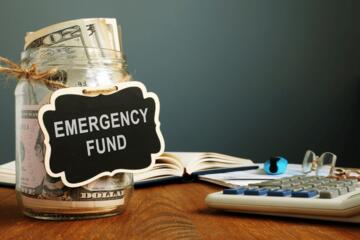
Emergency Fund Basics
An emergency fund is cash set aside for expenses that show up suddenly and can’t wait for your next paycheck. The fund’s job is not to beat inflation or earn investment returns; its job is to reduce forced borrowing when something breaks—like a car repair, a rent increase, or a medical bill that arrives before insurance paperwork finishes.
Start with a definition you can act on: money you can access quickly, without selling assets, and without penalties that erase the point of saving. For many people, that means a high-yield savings account or a money market deposit account at a bank or credit union. If you keep the fund in a checking account, you may spend it; if you keep it in a retirement account, you may face early-withdrawal penalties and tax costs.
Practical example: if your car needs an unexpected $900 repair and you have no cash buffer, you might use a credit card. With an emergency fund, you can pay the repair and still keep your credit utilization lower, which matters for credit scores and future borrowing costs.
Common Setup Mistakes
People often get stuck before they start because they treat the emergency fund like a single big goal. They aim for a full “six months of expenses” number, then stop when the math feels overwhelming. A smaller starter goal reduces the psychological friction, and it also creates a test: you learn whether your budget can support saving even when life gets messy.
Another common mistake is choosing the wrong account type. Money kept in a taxable brokerage account can be liquid, but selling investments can trigger capital gains taxes and market timing risk. Money kept in a savings account that pays a low rate can still work, yet the opportunity cost becomes noticeable over time, especially when rates are higher elsewhere.
People also overestimate how quickly they can access funds. Some banks require transfers to settle before you can use the money, and some “instant” transfers still take a business day. If you set up your plan around a transfer that takes 3–5 business days, you may discover the delay when you need the cash fastest—like after a weekend breakdown.
Supporting dependencies matter: your budget, your income stability, your insurance coverage, and your debt terms. If you carry high-interest credit card balances, the emergency fund can still help, but you may need a combined plan that prevents new interest from piling up while you save. If you have strong employer benefits, a short-term cash buffer may cover the gap until pay resumes, but it still won’t cover every out-of-pocket expense.
One more pain point: automatic transfers can fail silently. I’ve seen people set up a recurring transfer in a banking app (for example, version 10.2.1 of a mobile banking interface) and later realize the funding source changed after a payroll account update. The fix is boring: verify the transfer date, confirm the first deposit posted, and check the balance after one cycle.
Step-By-Step Funding Plan
Pick A Starter Target
Choose a starter goal you can reach in a few months, not a few years. A common starting point is enough to cover one “shock” expense, often $500 to $1,000, or about one month of basic costs if your situation is tighter. If your monthly essentials are $2,200 and you can save $200 per month, a $1,000 starter fund takes about five months. That timeline matters because it keeps the plan honest.
To estimate basic costs, list essentials you would still pay during a disruption: housing, utilities, groceries, transportation, minimum debt payments, and insurance premiums. Exclude discretionary spending like dining out. If you have irregular expenses, average them across the year so the emergency fund doesn’t get hit by predictable surprises.
Choose A Cash Account
Use an account designed for cash access. High-yield savings accounts and money market deposit accounts are common because they typically offer easy transfers and no market price swings. Check whether the account has withdrawal limits and whether transfers are initiated instantly or require a settlement period. If you want to avoid accidental spending, keep the emergency fund in a separate account and link it for transfers rather than using it as your daily spending balance.
When comparing accounts, look at the annual percentage yield (APY), any monthly fees, and the minimum balance requirements. Rates change, so verify the current APY on the bank’s site before you commit. If a bank advertises a rate that requires a minimum deposit or a specific account type, confirm the conditions in writing.
Set Automation With Checks
Set an automatic transfer from your checking account to your emergency fund on a predictable schedule, such as the day after payday. Automation reduces the “willpower tax,” but it needs a verification step. After the first transfer posts, check that the amount matches your plan and that the transfer source account is still correct.
A practical approach: start with a small amount you can sustain, like $25 per week or $100 per month, then raise it when you get breathing room. If you use a budgeting tool (for example, a spreadsheet or an app like YNAB), record the transfer as a bill-like item so it doesn’t get treated as optional spending. I’ve also noticed people forget to update the transfer amount after a pay raise, which makes the plan drift.
Decide What Counts As An Emergency
Define rules so you don’t drain the fund for routine expenses. A reasonable rule is: emergencies are sudden, necessary, and time-sensitive. Examples include car repairs needed to commute, urgent medical copays, replacing essential household items after damage, or covering a temporary income gap.
Routine categories like annual subscriptions, planned travel, or “I want to buy a new phone” do not fit the emergency definition. Those belong in separate sinking funds. This separation prevents the emergency fund from becoming a general-purpose savings account, which defeats its purpose.
Case Examples
Scenario 1: Jordan earns $3,200 per month and spends $2,750 on essentials, leaving $450 before discretionary spending. Jordan has $6,000 on a credit card at a high interest rate. Jordan sets a starter emergency goal of $1,000 and saves $150 per month for six to seven months while making minimum payments on the card. When the first $1,000 is reached, Jordan increases the emergency savings to $250 per month and uses any credit card payoff progress to reduce interest costs. The key outcome is not “no debt,” but fewer new charges when a $300 appliance repair arrives.
Scenario 2: Priya’s monthly essentials are $2,400, and she has a stable job but a history of surprise medical bills. She starts with a $500 starter fund because she already has a small amount in checking and wants to avoid overdrafts. She opens a high-yield savings account with no monthly fee and sets an automatic transfer of $100 every two weeks. After about three months, she reaches $1,000 and uses it once for a $780 deductible payment. She then resumes the same transfer amount, which keeps the fund from staying empty after the first use.
Checklist And Tradeoffs
| Option | Best For | Main Tradeoff | What To Check |
|---|---|---|---|
| High-Yield Savings | Starter emergency fund and quick transfers | Rate can change; transfer timing may take a business day | APY, monthly fees, minimum balance, withdrawal limits |
| Money Market Deposit | Cash with a bank-style structure | May have minimums; rate varies | Minimum deposit, fee schedule, transfer rules |
| Checking Account | Very small buffer for near-term bills | Spending risk; low or no interest | How often you dip into it; whether you can separate balances |
| Brokerage Cash | If you already manage investments there | Tax and settlement timing can complicate “emergency” use | Settlement time, tax impact, withdrawal process |
Step-by-step checklist:
- List 3–5 essential categories you would pay during a disruption and estimate a monthly total.
- Pick a starter goal you can reach in 3–6 months (often $500–$1,000 or one month of essentials).
- Open a cash account with no monthly fees and verify the current APY and transfer timing.
- Set an automatic transfer for the day after payday and confirm the first deposit posts.
- Write a one-sentence emergency rule so you don’t treat planned spending as an emergency.
- After any emergency withdrawal, schedule the “rebuild” transfer so the fund returns to its target.
Common Mistakes To Avoid
One mistake is using the emergency fund for planned expenses that happen to feel urgent. If you know a car inspection is due every year, that belongs in a sinking fund. The emergency fund should handle surprises, not calendars.
Another mistake is ignoring fees and minimums. A savings account with a monthly fee can erase the benefit of a higher rate, especially when your balance is still small. If the account requires a minimum balance you can’t maintain, the “advertised APY” becomes a marketing number rather than a real return.
People also forget to separate emergency cash from spending cash. If the emergency fund sits in the same account as bill pay and groceries, it gets used by accident. A separate account with a linked transfer reduces that risk.
Finally, some people stop saving after the first withdrawal. The fund’s purpose includes the second emergency, not only the first. Rebuilding matters because life events cluster, and the second event often arrives before your income stabilizes.
FAQ
How Much Should I Save First?
Start with a goal you can reach in 3–6 months, often $500–$1,000 or about one month of essentials if your budget is tight. After that, increase toward a larger target based on job stability and fixed costs.
Where Should My Emergency Fund Live?
Use a cash account designed for quick access, such as a high-yield savings account or money market deposit account. Check APY, monthly fees, minimum balances, and transfer timing before opening.
Can I Use Credit Cards Instead?
Credit cards can cover emergencies, but interest charges and credit utilization can make the situation worse. A cash buffer reduces the chance you pay high interest when a disruption hits.
What Counts As An Emergency?
Use a rule like “sudden, necessary, and time-sensitive.” Examples include urgent repairs, unexpected medical copays, or a temporary income gap. Planned expenses belong in separate sinking funds.
How Do I Rebuild After I Withdraw?
Resume the same automatic transfer schedule you used before the withdrawal, then adjust the amount if your target is far away. Treat rebuilding as part of the plan, not an afterthought.
Author's Insight
Emergency funds work because they reduce forced borrowing and prevent a single disruption from turning into a longer financial spiral. The most reliable setup uses cash-access accounts, a starter goal that fits your timeline, and automation with a quick verification step after the first transfer. Rates and account rules change, so readers should confirm current APY, fees, and transfer settlement times on the provider’s site. If your situation includes high-interest debt, a combined plan can reduce new interest while you build cash, but the exact balance depends on your numbers.
Key Takeaways
- Build a starter emergency fund first; choose a goal you can reach in 3–6 months.
- Keep the fund in a cash account with clear access rules, not in a place that delays withdrawals or adds tax friction.
- Automate contributions after payday, then verify the first transfer posts correctly.
- Define emergencies narrowly and rebuild the fund after any withdrawal.